
Kick start your wholesome journey with JC Fit City APP



03 Jun 2026
Share
Many people suffer from lower back pain and body aches, often due to a lack of regular exercise for the back and leg muscles. Whether you are a beginner just starting your fitness journey or an office professional seeking relief from pain, you have likely heard of the deadlift. The deadlift is not only a core component of strength training but also a powerful tool for improving poor posture. JC Fit City provides an in-depth analysis of the principles of the deadlift, the muscles it targets, the correct form for power generation, and its health benefits, helping you safely build a stronger physique.
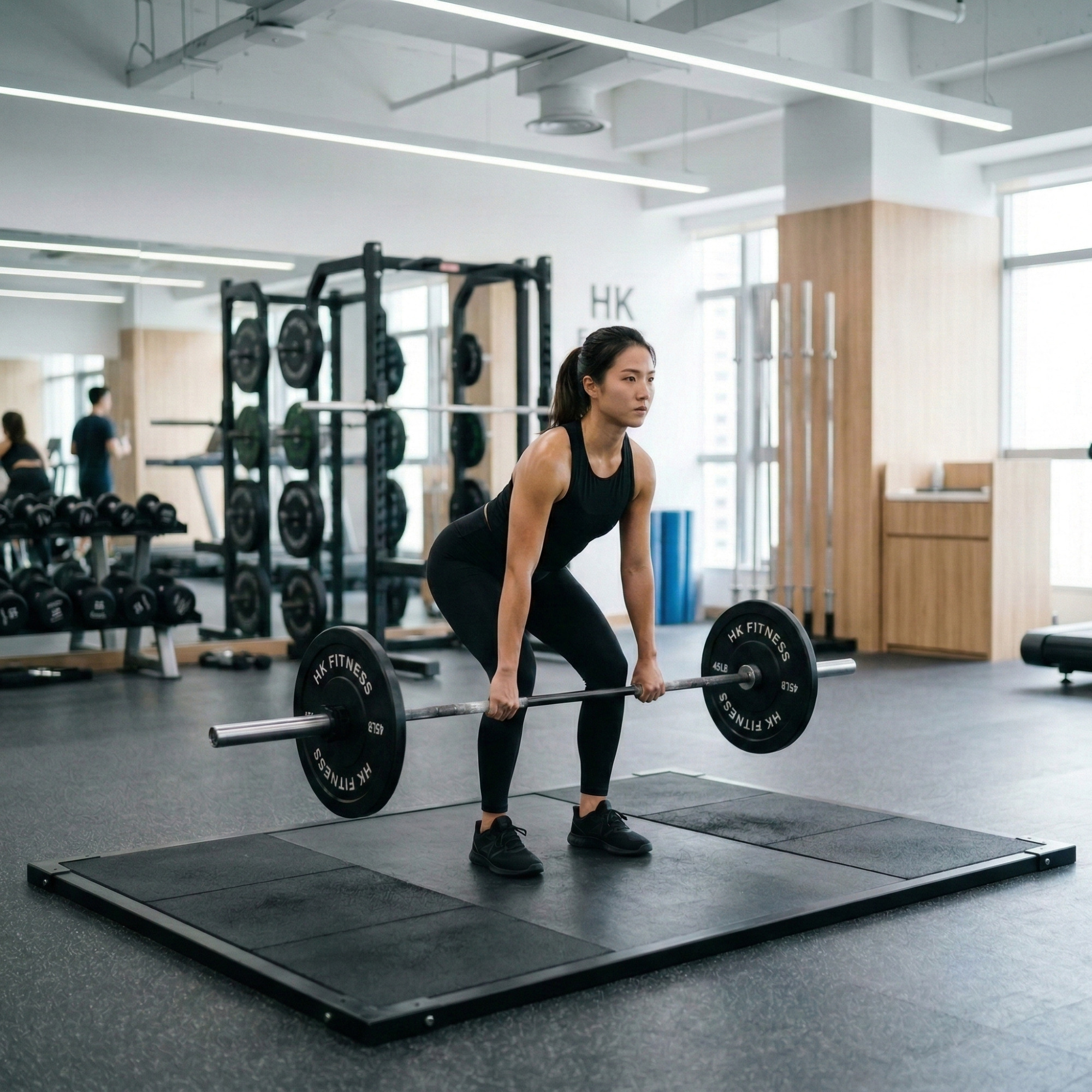
A deadlift involves lifting a stationary weight from the ground vertically until the body is in a fully upright position. This is more than just a training movement; it perfectly simulates the real-life action of picking up heavy objects from the floor. Mastering the deadlift means learning how to apply correct body mechanics, which helps prevent straining your back during daily lifting tasks.
Many beginners wonder: what muscles do deadlifts work? Is it a leg exercise or a back exercise? In fact, the deadlift is a full-body compound movement that primarily targets the posterior chain muscle groups. Due to prolonged sitting, most people have a weakened posterior chain; the deadlift is an excellent choice for awakening these muscles:
Gluteus Maximus and Hamstrings: The primary power source of the deadlift, responsible for driving the hips forward to bring the body to a standing position.
Erector Spinae: Responsible for keeping the spine stable and neutral during the movement, preventing lumbar injuries.
Latissimus Dorsi and Trapezius: Responsible for stabilising the scapula and keeping the weight close to the body.
Core Muscles: The abdominal muscles remain engaged throughout the lift to protect the spine.
-800.jpg "clean_Gemini_Generated_Image_s2ylwus2ylwus2yl (1).png")
After understanding the targeted muscle groups, let’s look at the substantial health benefits this exercise provides. Here are three significant benefits of deadlifting:
Long hours spent on smartphones or computers often lead to rounded shoulders. The deadlift emphasises tightening and straightening the entire back, which effectively strengthens the back muscles and pulls the shoulders back into the correct position, fundamentally improving your daily posture.
"Throwing out your back" while moving objects is usually the result of using an incorrect rounded-back posture. Deadlifting teaches us to utilise the hips and strong glute/leg muscles for power while strengthening lower back and core stability. This significantly reduces the risk of injury and alleviates chronic lower back pain.
The deadlift stimulates multiple large muscle groups simultaneously, effectively increasing overall body strength. This weight-bearing training provides positive stimulation to the bones, helping to maintain and increase bone density, which is vital for counteracting bone loss.
-800.jpg "clean_clean_微信圖片_20260309123837_27_1 (1).jpg")
To safely enjoy the benefits of deadlifting, correct form is the primary requirement. Beginners should master these key steps:
Stance Setup: Stand with feet hip-width apart, toes pointing slightly outward. The barbell should be over the middle of your feet, about an inch away from your shins.
The Hinge and Grip: Push your hips back, allow your knees to bend naturally, and grip the bar vertically outside your legs.
Tighten the Back: Lift your chest and drop your shoulders. Imagine squeezing your armpits tight to keep your back flat and straight. Engage your core.
The Lift: Drive your feet into the floor, using the power of your glutes and hamstrings to pull the body into a standing position.
Lockout and Descent: Squeeze your glutes at the top without overextending your lower back. Keeping your back straight, push your hips back first and control the barbell as it returns to the floor along the original path.
The deadlift is a highly efficient full-body strength training exercise. As long as you ensure correct posture and progress the weight gradually, the deadlift will not only strengthen your posterior chain muscle groups but also improve your posture and protect your spinal health.

